Live music doesn’t fail because musicians aren’t good enough.
More often, it fails because a venue’s identity, expectations, and responsibilities aren’t clearly aligned. Drawing on decades of experience performing, booking, and working internationally, I explore why some music programs thrive while others quietly disappear—and how clarity, consistency, and shared responsibility can turn live music into one of a venue’s greatest assets. This piece is written for venue owners, musicians, and anyone who cares about creating spaces people want to return to.
Providing the Perfect Ambience with Music - Why identity, consistency, and shared responsibility make live music work
Live music succeeds when everyone involved understands why it’s there. When it fails, it’s rarely because the musicians weren’t good enough. More often, the problem is misalignment—between a venue’s identity, the role music is meant to play, and how success is measured.
After nearly five decades as a professional guitarist—performing, booking, teaching, recording, and touring internationally—I’ve seen the same patterns repeat. The goal of this piece isn’t to assign blame. It’s to clarify what works, why it works, and how venues and musicians can collaborate so that live music becomes a durable asset rather than a recurring frustration.
My guiding principle—now core to all of my marketing and professional work—says it plainly: Providing the Perfect Ambience with Music. Ambience is how a room feels. Identity explains why it feels that way. Loyalty is what follows when both remain consistent over time. You can’t have one without the others.
A common challenge: strong spaces, evolving vision
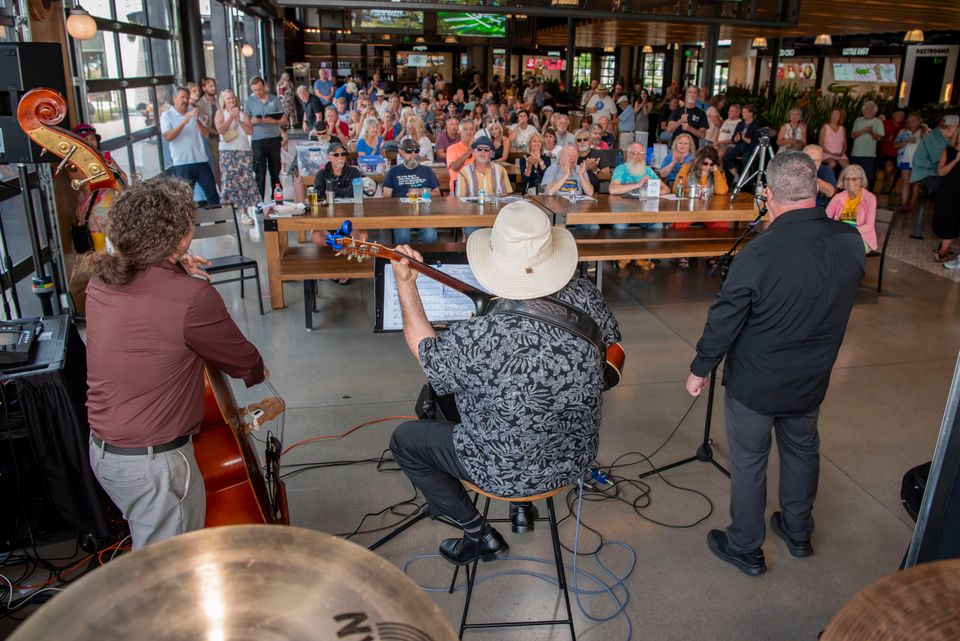
Consider a recently renovated, multi-level brewery and restaurant—beautifully designed, thoughtfully restored, and full of potential. Over its first year, the owners tried many kinds of programming: game nights, seasonal activities, bluegrass, bossa nova, jazz duos, rock bands, and more. The intention was experimentation, which is often a necessary phase for any new venue finding its footing.
The challenge with experimentation isn’t variety itself; it’s clarity. Without a clearly articulated musical role, even excellent music can struggle to gain traction. Audiences don’t always know what to expect, and musicians are left guessing about the part they’re meant to play in the room. In situations like this, no one is “at fault.” It’s a predictable outcome of a venue still defining what it wants to be.
Here’s the practical takeaway: good music cannot, by itself, compensate for an unclear identity—but a clear identity can dramatically amplify good music.
One building, multiple identities (when done intentionally)
Large, multi-level venues don’t need a single, monolithic music identity. In fact, they often work best when each room has a clearly defined role.
An intimate lower-level bar might naturally support a consistent jazz or cocktail-music identity—repeatable, predictable, and easy for patrons to understand and return to. Upper levels might be better suited to variety: special events, ticketed shows, private parties, or genre-specific nights that are intentionally different rather than randomly assorted.
Variety isn’t the problem. Unassigned variety is.
When each space has a defined musical purpose, expectations align more easily, marketing becomes clearer, and success becomes easier to measure.
Music works when it’s synonymous with the venue
The most successful music rooms share one trait: the music is inseparable from the brand.
More often, it fails because a venue’s identity, expectations, and responsibilities aren’t clearly aligned. Drawing on decades of experience performing, booking, and working internationally, I explore why some music programs thrive while others quietly disappear—and how clarity, consistency, and shared responsibility can turn live music into one of a venue’s greatest assets. This piece is written for venue owners, musicians, and anyone who cares about creating spaces people want to return to.
Providing the Perfect Ambience with Music - Why identity, consistency, and shared responsibility make live music work
Live music succeeds when everyone involved understands why it’s there. When it fails, it’s rarely because the musicians weren’t good enough. More often, the problem is misalignment—between a venue’s identity, the role music is meant to play, and how success is measured.
After nearly five decades as a professional guitarist—performing, booking, teaching, recording, and touring internationally—I’ve seen the same patterns repeat. The goal of this piece isn’t to assign blame. It’s to clarify what works, why it works, and how venues and musicians can collaborate so that live music becomes a durable asset rather than a recurring frustration.
My guiding principle—now core to all of my marketing and professional work—says it plainly: Providing the Perfect Ambience with Music. Ambience is how a room feels. Identity explains why it feels that way. Loyalty is what follows when both remain consistent over time. You can’t have one without the others.
A common challenge: strong spaces, evolving vision
Consider a recently renovated, multi-level brewery and restaurant—beautifully designed, thoughtfully restored, and full of potential. Over its first year, the owners tried many kinds of programming: game nights, seasonal activities, bluegrass, bossa nova, jazz duos, rock bands, and more. The intention was experimentation, which is often a necessary phase for any new venue finding its footing.
The challenge with experimentation isn’t variety itself; it’s clarity. Without a clearly articulated musical role, even excellent music can struggle to gain traction. Audiences don’t always know what to expect, and musicians are left guessing about the part they’re meant to play in the room. In situations like this, no one is “at fault.” It’s a predictable outcome of a venue still defining what it wants to be.
Here’s the practical takeaway: good music cannot, by itself, compensate for an unclear identity—but a clear identity can dramatically amplify good music.
One building, multiple identities (when done intentionally)
Large, multi-level venues don’t need a single, monolithic music identity. In fact, they often work best when each room has a clearly defined role.
An intimate lower-level bar might naturally support a consistent jazz or cocktail-music identity—repeatable, predictable, and easy for patrons to understand and return to. Upper levels might be better suited to variety: special events, ticketed shows, private parties, or genre-specific nights that are intentionally different rather than randomly assorted.
Variety isn’t the problem. Unassigned variety is.
When each space has a defined musical purpose, expectations align more easily, marketing becomes clearer, and success becomes easier to measure.
Music works when it’s synonymous with the venue
The most successful music rooms share one trait: the music is inseparable from the brand.
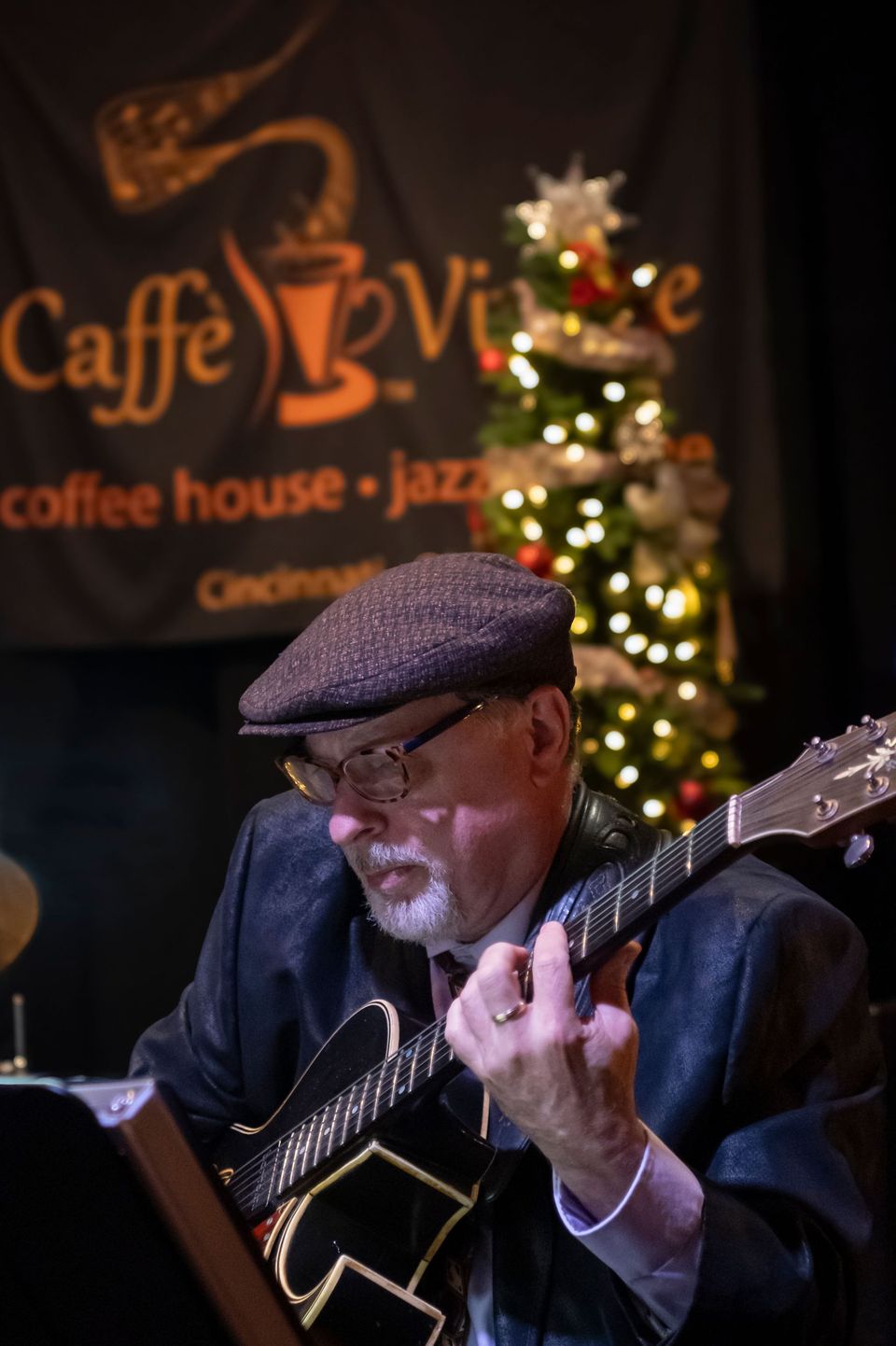
- Caffè Vivace — When people think of Vivace, they think of high-level jazz. The identity is clear, and audiences self-select accordingly.
- Ludlow Garage — Touring, non-local artists define the experience. Patrons know what they’re getting before they arrive.
- Harth Lounge — Elegant piano jazz and small ensembles provide ambience, not spectacle—and the room is designed for exactly that.
- Schwartz Point — A tiny listening room where jazz is the point, not the decoration.
In each case, the music doesn’t compete with the venue’s purpose—it expresses it.